Fold a Book's Title Into the Book
No explaining required: the object is its own label. It's the one folded book where the choice of book isn't arbitrary — and second-hand copies of the thick ones cost almost nothing.
Why this one works
Most folded books need a book that's thick, cheap and disposable, and the title on the spine is beside the point — you'd fold LOVE into whatever was going spare. Fold a title into its own book and that changes: the cover, the spine and the pattern all say the same thing, and someone who loves the novel gets an object made out of it.
It also solves the usual sourcing problem. Bestselling hardbacks are the cheapest books in any charity shop precisely because everyone owned one, and they're exactly the 400–600 pages a folded title needs.
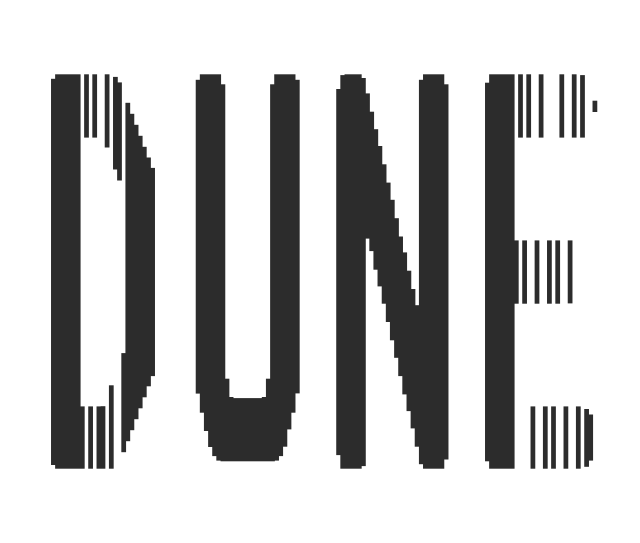
DUNE folded into a 300-page book — rendered from the pattern's actual fold coordinates. No scissors — folds only
Ready-made titles
Print one and fold it into a copy of the book itself — the object and the label become the same thing.
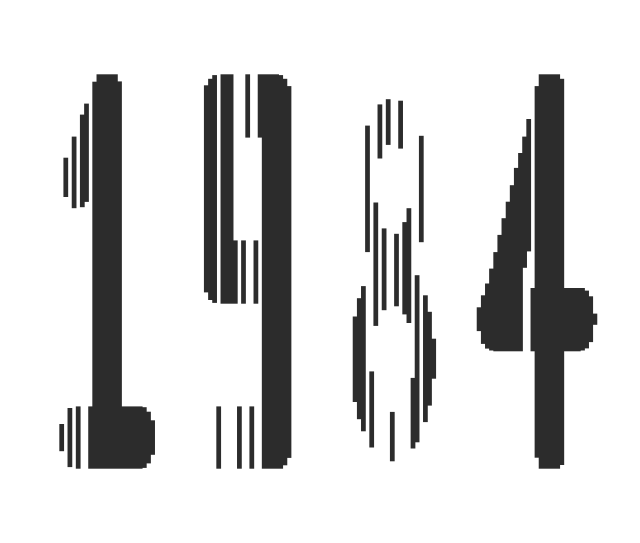
1984
No scissors — folds only
HAMLET
No scissors — folds only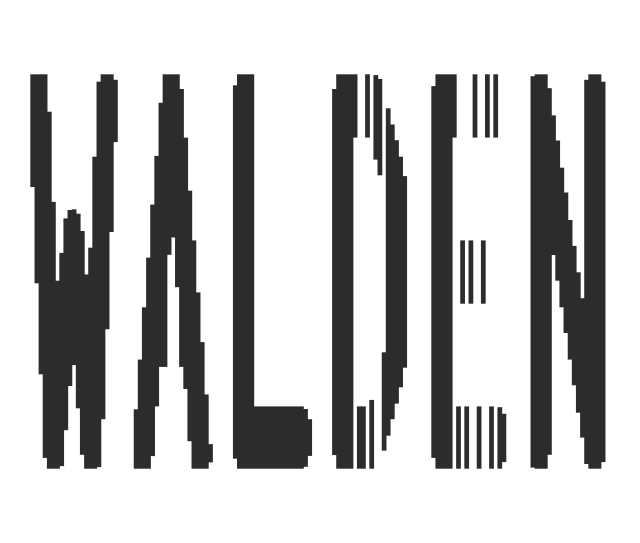
WALDEN
No scissors — folds only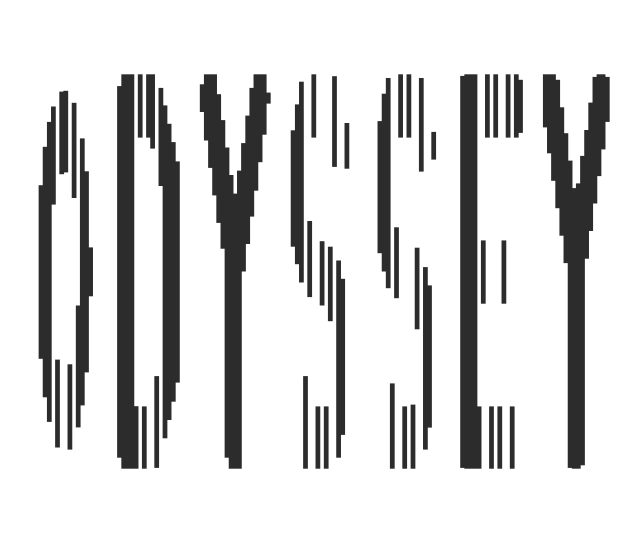
ODYSSEY
No scissors — folds onlyTitles that fit
A title has to clear two bars at once: short enough to fold, and printed thick enough to fold it into. Plenty of great titles fail the first.
SAPIENS
~450pSeven letters, and the hardback runs past 450 pages — the title and the book agree on size, which almost never happens.
DUNE
~300pFour letters and every edition is thick. The easiest literary fold there is.
1984
~200pDigits are narrower than letters, so this needs less book than its four characters suggest.
EMMA
~300pWorks twice over: a novel and a name. The most-given of these as a birthday present.
IT
~150pTwo letters into a 1000-page paperback — comically oversized, which is the joke.
MACBETH
~450pSeven letters. Collected-works volumes are thick enough; a single-play edition is not.
When the title is too long
Fold the memorable word, not the title
GATSBY, not THE GREAT GATSBY. MOCKINGBIRD, not TO KILL A MOCKINGBIRD. Anyone who knows the book gets it instantly, and you've halved the width.
Use the author instead
AUSTEN, ORWELL, TOLKIEN. Often shorter than the title and works across a whole shelf rather than one novel.
Split across two books
A matched pair from the same series — one word each. This is the only way to fold a genuinely long title, and it looks deliberate rather than like a compromise.
Fold a symbol from the book
A ring for Tolkien, a mockingbird, a lightning bolt. If the shape is hollow or outlined, the generator will tell you and offer Cut & Fold.
Finding the copy to fold
Buy a second copy, not theirs
Never fold a reader's own book, however battered. The whole point of the gift is that you understood what the book meant to them.
Charity shops beat online
You need to check the page count and the paper, and neither shows in a listing. Book-club hardbacks of bestsellers are usually under a couple of pounds.
Avoid glossy paper
Popular non-fiction often has coated stock that won't hold a crease and springs back open. Plain uncoated novel paper folds far better.
Keep the dust jacket
Fold the book, then slip the jacket back on when it's displayed. The cover art next to the folded title is most of the effect.
Selling these? A title or an author's name is a trademark in many cases, and cover art is copyrighted. Folding one for a friend is fine; listing them for sale is a different question, and not one to take from us.