Guide
Which images can be folded into a book?
One sheet of paper takes one fold, which is the whole craft in a sentence and explains every rule below. A folded book is a few hundred vertical strips of paper standing on edge — so the picture has to be something a few hundred vertical strips can say.
These fold well
A solid silhouette
One shape, filled, nothing behind it. Every sheet gets one clean fold and the outline survives at any size.
Bold lettering
Thick strokes read from across the room. Thin script does not — a hairline disappears between two folds.
An outline, if you will cut
Hollow designs keep their inner detail only with Cut & Fold, where you cut in at each edge instead of folding past it.
These never can
Each of these produces a PDF that looks perfectly normal until you have folded a hundred pages. They are worth knowing by sight.
A photo of someone's finished book
This is the most common one, and the most understandable — you saw a piece you liked. But the generator folds what it is given, and what it is given here is a picture of page edges. A vertical strip through such a photo crosses around eighty separate dark stripes; a clean silhouette crosses one.
Find the design itself, or the same subject in the pattern library.
A dark poster or photograph
Folding treats every dark pixel as ink, so a black background is not background — it is the design. The whole page block folds forward and you get a solid slab with a faint dent where the subject was.
Use a background-free version, or search the subject plus the word "silhouette".
Artwork adrift in empty space
A shape occupying the middle third of a wide picture leaves most sheets with nothing to fold. The design comes out small and pinched into the centre of the book, however many pages you give it.
Crop the empty margin away so the shape fills the frame.
The two-second test
Squint at the picture until the detail goes. If you can still tell what it is, it will fold. If it dissolves into grey, so will the finished book — folding removes far more detail than squinting does.
The generator now runs the same check for you and says so before you download, so you are never finding out after the folding.
Portraits and faces
A face is the hardest thing to fold, and it matters a great deal which way it is looking. Each sheet is one column of the picture and can fold one part of that column. A face seen from the side is an outline — every column crosses it once. A face seen from the front is eyes, nose and mouth sitting inside the shape, so most columns cross it several times.
From the side: the classic folded portrait
- Start from a photo taken exactly side-on, against a plain background. A three-quarter view won't give a clean outline.
- The likeness is the line of the forehead, nose, lips and chin. Trace it exactly; don't smooth it.
- Fill everything inside the outline solid black. Hair becomes one smooth mass joined to the head — no loose strands, and no gap under a bun or ponytail.
- Leave out glasses arms, earrings and eyelashes. End the shape with a clean line below the neck.
- The lips and the dip between nose and lip are the smallest features that matter. Each needs about four sheets to show clearly, so a head that fills the frame wants a book of 400 pages or more.
- Fold only works. Two profiles facing each other also work, as long as the gap between the faces is a few millimetres wide or they touch.
From the front: a stencil, with scissors
- Fold only can't hold a front-facing face: where a column passes through hair, an eye, the nose and the mouth, one sheet can fold only one of them. Use Cut & Fold.
- Turn the photo into a two-tone stencil — pure black and white, no grey. The likeness comes from a few large shapes: hair, the shadows of the eyes and brows, the shadow under the nose, the mouth, the jaw line.
- No outlines, no fine lines, no speckles. Every black shape and every white gap at least about 1/40 of the picture's width.
- Use a thick book, 500 pages or more, and expect a bold, graphic likeness rather than a photograph.
Either way, the generator's preview is drawn from the same measurements as your PDF. If the face reads in the preview, it will read in the book; if it doesn't, change the picture before you fold, not after. The prompts below include both kinds of portrait.
Make one with AI
ChatGPT, Gemini and other image tools can draw a silhouette that follows every rule above, or turn your own photo into one — if you ask for it in so many words. Pick what you are starting from:
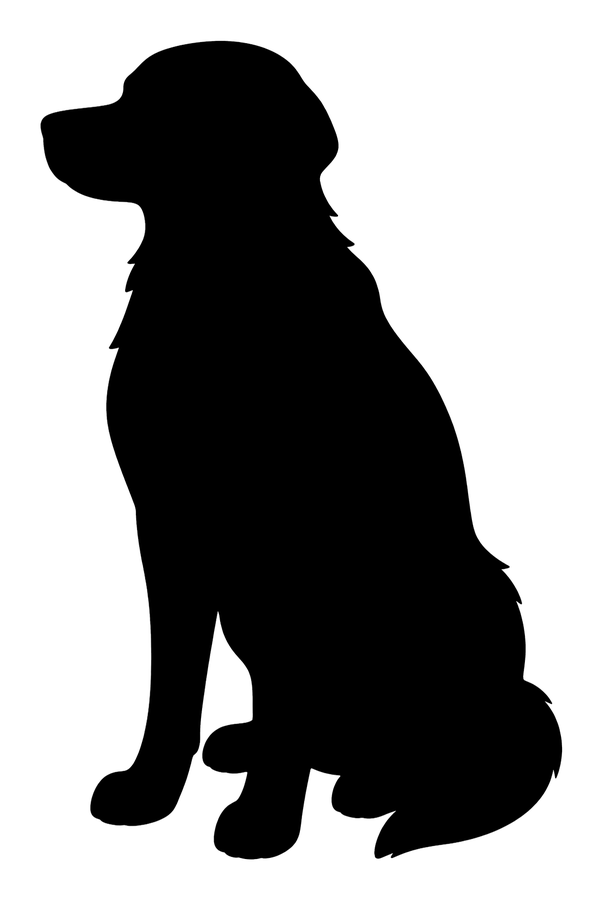
1. What ChatGPT drew

2. Fold only: breaks at the neck
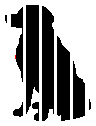
3. Cut & Fold: whole
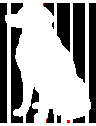
4. Cut & Fold, sunk in
No silhouette? Make one with ChatGPT or another AI→
Fold only, no scissors.
Create a silhouette of a cat sitting to use as a book folding pattern. One single solid shape, filled completely in black. Pure black and pure white only: no grey, gradients, shading, texture, shadow, ground or text, and a plain white background. No outline-only drawing and no inner lines or details. Bold, simple outline with no thin parts (no whiskers, strings, fine hair or thin legs). Avoid overhangs and gaps: as far as possible, any vertical line drawn through the image should cross the black shape only once — so no gap between legs, and no head, arm or tail sticking out over the body. No part or gap thinner than about 1/50 of the image width. The shape should fill the image from top to bottom with only a small white margin. Portrait format.
Save the image it makes, then upload it in the generator and check the preview — what it shows is what you will fold.
Not sure? Start from one that works
Every pattern in the library has already been measured against these rules — the ones that could not hold their shape were not published. If the subject you want is in there, it will fold.